Solar Physics
2020 Boulder Solar Alliance REU
My first external research experience (circa Summer 2020)
Background
One of the primary open questions about the solar corona is why or how its structures remain so smooth and well-organized. They are rooted in the photosphere, where turbulent motions introduce twisting and other complexities. By observing the fast and coherent motions we can provide insight into the mechanisms that smooth out the corona, therefore high-speed, sensitive imaging is needed.
2017 Total Solar Eclipse
Observations of the corona in the infrared (IR) passband is severely under-observed, so the main goal of the mission was to observe and take observations of the solar corona in MWIR (3-5 microns) using the best coronagraph nature can produce, a total solar eclipse.
NASA WB-57 High Altitude Research Planes
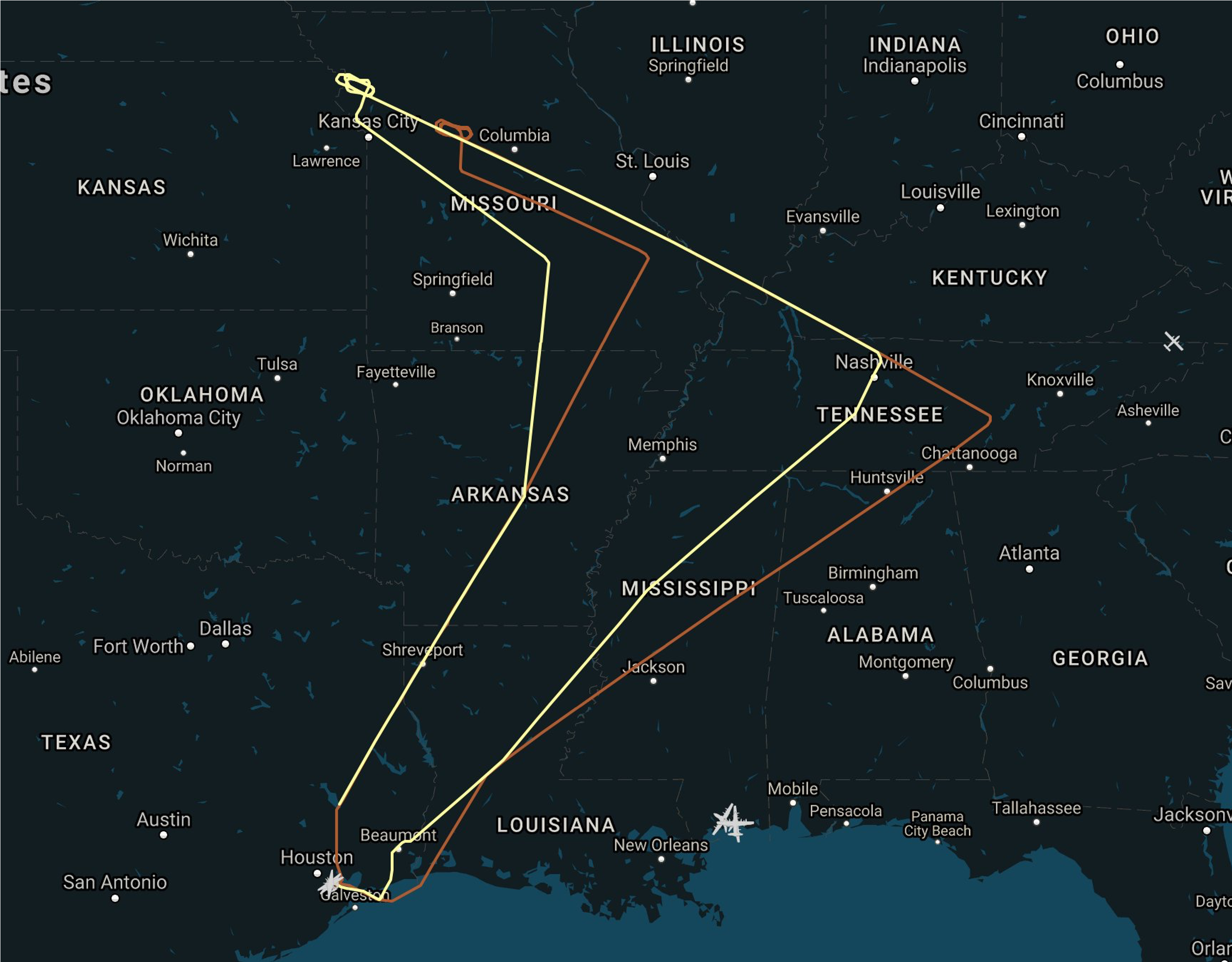
The flight path of the NASA planes during the 2017 Total Solar Eclipse (Image credit: Dan Seaton, Amir Caspi)

Results
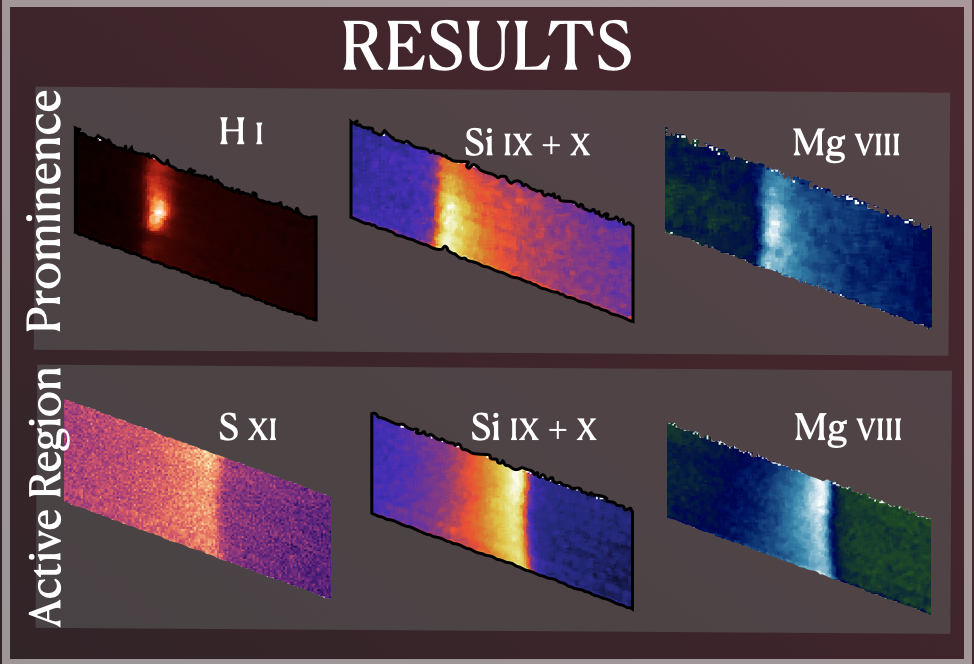
We focused mainly on the active region and prominence. Below are pictures of the prominence and active region in different wavelengths (HI, Si IX + X, Mg VIII), showing different spatial distribution and morphology of each spectral line.
- Categories:
- Undergraduate Research
- See Also: